Dry Manicure vs Russian Manicure: What’s the Difference?
Both can be waterless, but they do not describe exactly the same thing. Here is how to tell the difference in preparation, tools, technique, and training.
If you have seen “dry manicure” and “Russian manicure” used interchangeably in course descriptions or salon menus, you are not alone. The terms overlap, which can make choosing a service—or a course—more confusing than it needs to be.
Instead of judging by the finished nails alone, this guide explains what each term actually tells you, what it does not tell you, and which questions matter most.
Affiliate disclosure: This article contains affiliate links. If you purchase through them, NailCourseGuide.com may earn a commission at no additional cost to you. Course information is evaluated from available provider materials; we do not claim to have personally completed the training.
The Short Answer
Dry manicure means the nails are prepared without a traditional water-soaking stage. Russian manicure commonly refers to a more detailed, e-file-focused style of nail preparation, also usually performed without soaking. A Russian manicure is generally a type of dry manicure—but not every dry manicure is a Russian manicure.
The terminology is not standardized across every salon, school, or country. Some providers call a detailed e-file service “dry manicure,” while others reserve the “Russian” label for a particular approach to nail-fold detailing. What matters more than the label is the actual method being taught or performed.
Two Similar Names, Two Different Questions
Is water used?
“Dry” describes the preparation conditions: there is no routine pre-service soak. The technician may use hand tools, an e-file, or a combination, depending on the service.
How is the area detailed?
“Russian manicure” usually describes the technique: precise preparation around the base of the nail, commonly involving an electric file and specialized professional training.
This distinction is useful because a no-soak manicure can be very simple, while a Russian-style service may involve significantly more detailed work. Neither name, on its own, guarantees a better or safer result.
Dry Manicure vs Russian Manicure: Side-by-Side
| Feature | Dry manicure | Russian manicure |
|---|---|---|
| Main meaning | Nail preparation without soaking | Detailed style of nail preparation, often e-file led |
| Water soak | Usually omitted | Usually omitted |
| Tools | Hand tools, e-file, or both | Typically an e-file and specialized bits; some approaches add hand tools |
| Cuticle-area work | Can be minimal or more detailed | Often especially detailed |
| Finished look | Depends on shaping, coating, and technique | Often emphasizes a sharply refined polish outline |
| Training focus | Dry preparation principles and tool choice | Fine e-file control, anatomy, hygiene, and technique boundaries |
| Safety | Depends on methods and practitioner skill | Requires particular care around sensitive living tissue |
Important: These are common industry usages, not universal legal definitions. Confirm the course syllabus or salon procedure instead of relying solely on the name.
What Do the Techniques Look Like in Practice?
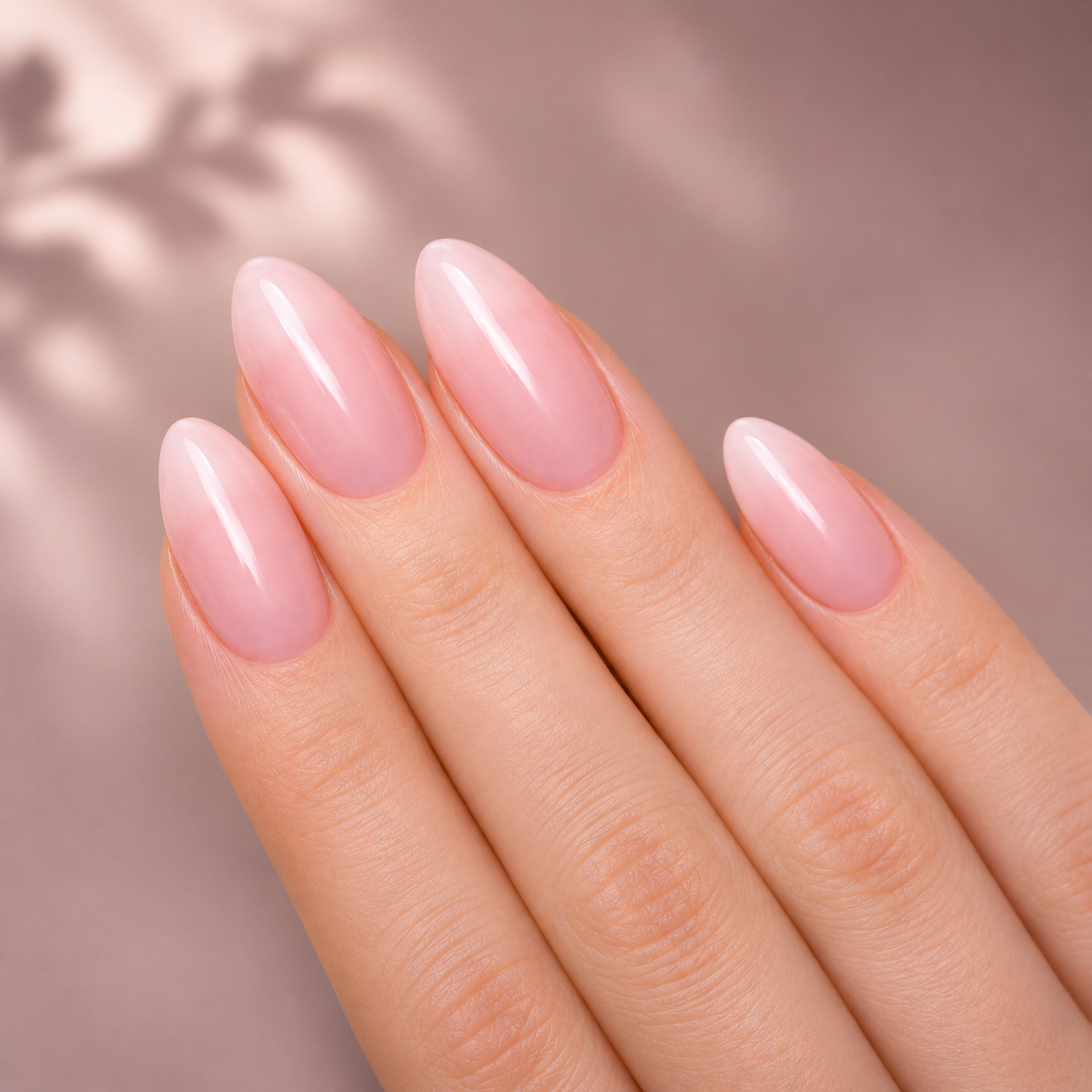
An attractive finished manicure does not reveal exactly how it was prepared. A glossy coating, smooth contour, and neat shape could follow different approaches. Process photographs are more informative than a finished-nails photo when comparing training methods.


For a learner, the key difference is the curriculum behind these visuals: Does it explain the anatomy and why a particular tool is selected? Does it address hygiene and the boundary between nonliving material and living skin? Is supervised practice required for the techniques demonstrated?
Which Approach Should You Learn First?
Rather than treating Russian manicure as an automatic “upgrade,” evaluate your experience and your intended professional scope.
Understanding nail structures, protective tissue, sanitization, and reasons to postpone a service comes before specialized techniques.
Make sure you understand how the term is used in the particular course, not just the headline.
Close work around living tissue requires qualified instruction, feedback, and compliance with local rules.
A focused foundation or a broader bundle can both make sense; what matters is matching the content to your needs.
If you are starting from scratch, our guide to learning Russian manicure at home explains how to approach the educational side of this subject without mistaking video demonstrations for practical qualification.
Safety Matters More Than the Label
A polished result should never require sacrificing healthy tissue.
The skin around the nail helps protect the nail unit. Overly aggressive filing or cutting can cause harm. A course or salon should distinguish nonliving cuticle residue from living protective tissue and emphasize appropriate hygiene and professional boundaries.
Be cautious of claims that a particular service name is automatically “risk-free,” “license-safe everywhere,” or guaranteed to last for a set number of weeks. Regulations differ by location, and results depend on the person, products, application, and aftercare.
For students, this is a reason to value clear safety teaching, appropriate supervised training, and local licensing guidance—not a reason to try complex procedures from a short online clip.
How a Dry Manicure Course Can Connect These Skills
For someone evaluating professional nail education, a course that teaches dry preparation as part of a wider workflow may be more useful than a set of disconnected demonstrations.

VEL Academy: Complete Dry Manicure Bundle
VEL Academy has confirmed that the bundle includes 5 complete courses + 2 bonus lessons. Its stated goal is to teach an organized e-file manicure workflow, alongside related nail-service skills. The advertised 50-minute manicure is a training target, not a guaranteed outcome for every learner.
The academy’s materials cover subjects such as Oval Nail Shape, Square Nail Shape, Problem Nails, Professional Pedicure, Gel / Gel-Polish Coating, and Nail Stamping. These are learning topics, not a claim that each subject is a separate full course.
The two listed bonuses cover Manicure on Mature Hands and an Express 34-Minute Full Manicure. The material describes anatomy-based work on nonliving tissue as a central teaching principle.
These are the academy’s descriptions, not independently measured performance results. Before purchasing, confirm current course contents, eligibility, access, support, certificate details, local practice rules, pricing, and refunds.
For a more complete assessment, see our VEL Academy Russian Manicure Course Bundle Review. If you are still considering alternatives, explore our comparison of Russian manicure courses in 2026.
Frequently Asked Questions
Is dry manicure the same as Russian manicure?
Not exactly. A dry manicure is defined by not soaking the nails, whereas Russian manicure usually refers to more detailed, often e-file-based nail preparation. The terms may overlap in marketing.
Does every dry manicure use an electric file?
No. Dry preparation may involve manual tools, an electric file, or both, depending on the procedure and the practitioner’s training.
Is a Russian manicure always better than a regular dry manicure?
No. The appropriate technique depends on nail condition, the desired service, local requirements, and professional judgment. Greater intensity does not automatically mean better care.
Can a beginner learn the differences online?
Yes. Online resources can help beginners understand terminology, anatomy, hygiene expectations, and course formats. Specialized practical services require suitable qualified instruction and supervision.
Does VEL Academy’s bundle include Russian manicure training?
The academy describes its current bundle as a complete dry e-file system and includes Russian manicure search terminology in its materials. Review the exact curriculum and enrollment terms to confirm whether its modules match the skills you want.
Is a course certificate the same as a professional license?
No. Course completion and professional authorization are separate matters. Check the rules in the place where you intend to work.
Final Takeaway: Compare the Method, Not Just the Name
The easiest way to remember the difference is this: “dry” tells you the nails are not soaked; “Russian” usually tells you more about detailed nail preparation and the tools involved. A Russian manicure is commonly dry, but a dry manicure does not have to be Russian-style.
If you are researching training, the next step is to compare the syllabus, safety instruction, prerequisites, and support. Our online Russian manicure training guide for beginners can help you build that shortlist.
Interested in the VEL Academy Dry Manicure Bundle?
Review the current curriculum, what is included, and the enrollment conditions to decide whether the program fits your training goals.
View Current Bundle Details & PriceAffiliate link. We may receive a commission at no additional cost to you.